
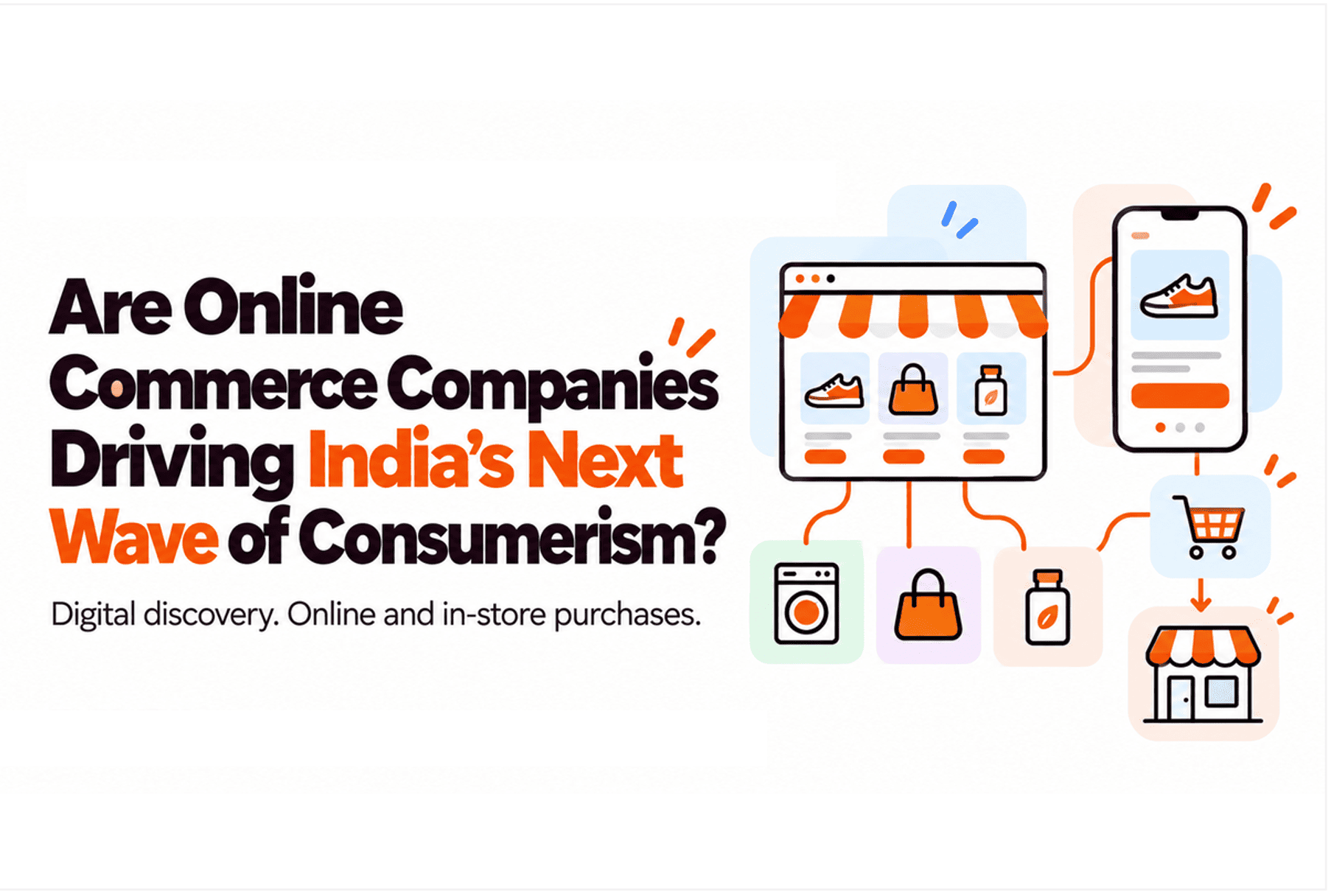
Online commerce companies are helping shape India’s next wave of consumerism by influencing what consumers discover, compare and purchase. Product content, reviews, personalised recommendations and financing can encourage trial and upgrades. Their influence extends to purchases made in physical stores. Brand-owned D2C channels help brands participate directly in this journey through product guidance, customer engagement and dealer-led fulfilment.
With festive online sales forecast to grow 25–29%, digital platforms are increasingly shaping what consumers discover, desire and purchase, even when the sale happens in a store.
Are online commerce companies simply serving consumer demand, or are they actively expanding it?
The question matters as India approaches Diwali 2026. Despite geopolitical uncertainty and higher prices, ecommerce marketplaces and online retailers are expected to generate ₹1.50 - 1.55 lakh crore in festive sales, up 25 - 29% over 2025, according to The Economic Times.
That outlook reflects more than the convenience of ordering online. Digital platforms bring together product discovery, advertising, comparisons, financing and fulfilment. Together, these mechanisms can encourage trial, bring purchases forward and make upgrades more accessible.
The evidence establishes their growing influence. How much of that spending is entirely new consumption, rather than purchases shifting between channels, remains harder to isolate.
Aspiration meets affordability
Current consumer behaviour reflects two forces: the desire to improve lifestyles and the need to manage household budgets.
Online platforms connect the two. A demonstration makes an unfamiliar product relevant. Reviews help a buyer assess risk. A comparison explains the benefits of an upgrade. Financing reduces the immediate payment burden, while a timed offer creates a reason to act.
The Economic Times reports that several FMCG and D2C brands have increased prices by 3 - 9% over the past two quarters. Nevertheless, businesses expect discounts, financing and pent-up demand to support festive spending.
The implication is that higher prices do not automatically eliminate demand. They increase the importance of explaining value and providing affordable ways to purchase.
Consumer confidence also depends on what follows payment: authentic products, reliable delivery, installation and responsive service.
Globally, discovery is becoming a commercial battleground
Businesses are investing in the stages that precede checkout.
PwC’s retail analysis highlights the growing use of AI, personalisation and connected physical and digital experiences. Stores remain important, particularly where customers want to experience a product or seek advice before buying.
AI is now adding another layer to product research.
Adobe’s analysis found that AI referrals to US retail websites grew 393% year on year in January - March 2026. In its companion survey of more than 5,000 US respondents, 39% said they had used AI for online shopping.
These are figures about AI usage and referrals, rather than overall retail growth. Their significance lies in the changing route to purchase: consumers increasingly encounter recommendations and comparisons before arriving at a retailer’s website.
Brands therefore compete for visibility wherever decisions begin—search engines, social feeds, marketplaces and conversational tools.
India’s digital influence extends into stores
A February 2026 whitepaper from Meta and the Retailers Association of India reports that more than half of consumers research online before buying in-store, with a similar proportion researching in-store before purchasing online. It also reports that 77% of retail brand and product discovery happens on social media.
These findings illustrate why online sales alone cannot capture digital’s contribution to a brand’s business.
A customer may discover a product through a video, compare models on a marketplace, confirm specifications on the brand website and purchase from a dealer. Each interaction contributes to the decision, even though only the last channel records the transaction.
The growth base is widening
Bain and Flipkart’s How India Shops Online 2026 estimates India’s online retail market at $65–66 billion in 2025, with 290 - 300 million shoppers.
The report identifies two substantial growth cohorts: Gen Z accounts for 40–45% of online shoppers, while Tier 2 and smaller cities contributed approximately half of incremental online orders in 2025.
Digital commerce is expanding access to products and brands that may have limited local shelf space. For businesses, this creates an opportunity to reach customers beyond their existing distribution footprint.
However, discovery must be supported by availability and service. Generating interest in a town where fulfilment is unreliable can weaken the very confidence digital has helped build.
Categories are responding differently
Electronics and appliances: Online research helps customers compare features, prices and suitability. For larger purchases, demonstrations, delivery commitments, installation and warranty information remain important. PwC’s retail analysis notes that Indian consumers making larger purchases typically favour in-person shopping.
Fashion and beauty: Discovery is closely connected to content and trends. Bain identifies influencer-led discovery, immersive videos and instant credit among Gen Z’s distinctive shopping preferences.
Home, kitchen and wellness: Digital content helps explain use cases and introduces unfamiliar brands. PwC’s India shopping study found that 53% of surveyed urban consumers first bought health and wellness products online following recommendations from online communities. This underlines the role of social reassurance in trial.
Groceries and everyday essentials: Speed and convenience encourage frequent purchasing. Bain estimates that quick commerce reached $10-11 billion in 2025, with household essentials contributing 85 - 90% of its gross merchandise value.
The commercial lesson is category-specific: inspiration, technical clarity, credibility and convenience play different roles in converting interest into demand.
What to expect this Diwali
The reported 25 - 29% online festive growth forecast points to a strong season, supported by pent-up purchases, gifting, promotions and financing. This is a market forecast, not an expected growth rate for every brand or category.
Digital’s influence is likely to extend beyond online checkout. More browsing and comparison can also drive store visits, dealer enquiries, and assisted purchases.
Brands should therefore prepare for both transactions and consideration: customers looking for information, checking affordability or seeking reassurance before deciding.
How D2C can help brands capture the opportunity
D2C gives brands a direct way to convert this expanding digital interest into customer relationships and sales.
A well-managed brand channel can explain product differences, showcase the full range, offer relevant bundles and connect customers with advisers. It can also link online demand with dealers for demonstrations, local fulfilment and installation.
The resulting customer data can help brands understand which products attract interest, where buyers hesitate and which markets offer further potential. With appropriate consent, those relationships can support repeat purchases and retention.
For established brands, D2C can therefore serve a wider business purpose: influencing product choice, supporting premium sales and generating demand for the distribution network.
Online platforms are gaining influence over what consumers want and when they buy. D2C gives brands a direct role in guiding that demand - from discovery through purchase and service.
Common questions
Online commerce brings product discovery, reviews, comparisons, offers and financing into one buying journey. These tools help consumers understand unfamiliar products, evaluate upgrades and decide when to purchase. Digital platforms influence both online transactions and purchases completed in stores.
Customers often discover products online, compare options and check specifications before visiting a store. Brand websites, social content and marketplaces can therefore generate dealer enquiries and store visits. Measuring only online transactions can overlook digital’s contribution to offline sales.
Online commerce gives consumers in smaller towns access to products and brands with limited local availability. For brands, this creates opportunities to expand their reach. Reliable delivery, installation and customer support are essential to turn that interest into purchases.
A brand-owned D2C channel can explain product differences, provide buying assistance and offer relevant bundles. Connecting it with dealers supports demonstrations, local fulfilment and installation. Customer journey data also helps brands understand buying intent, address hesitation and identify opportunities for growth.