
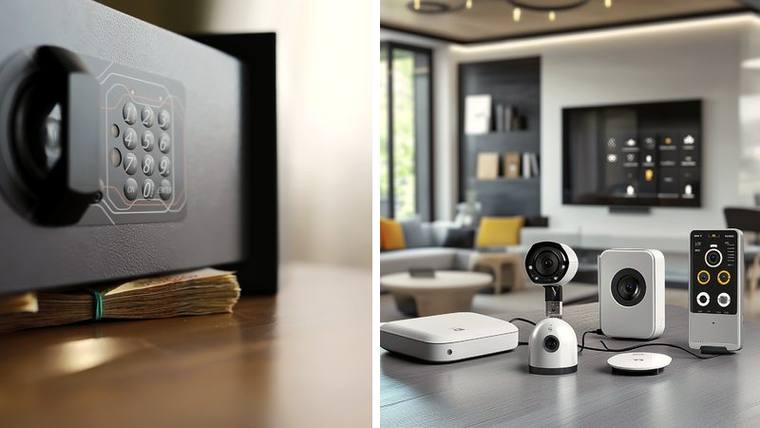
India’s leading home security brand was being undercut by the very marketplaces it depended on for online sales. Brandbuddiez helped it build and manage a brand-owned D2C channel -combining technology, assisted selling and its existing dealer network to take greater control of the customer journey.
The business problem
The brand was being squeezed by marketplaces that were discounting its products and promoting competing private labels, while its traditional dealer network was hesitant to stock or recommend unfamiliar new products.
The situation
The brand held a dominant position in India’s offline home security market, but its online presence was limited to Amazon and Flipkart. Initially, home security was a relatively low-priority marketplace category. As customer demand grew, however, the dynamics began to change. Marketplaces started discounting the brand’s products, displaying lookalikes and their own private-label alternatives alongside them, and placing competing advertisements directly on the brand’s product pages. A customer searching specifically for the brand could therefore be redirected to a competing product. The brand needed a direct channel through which it could control product presentation, pricing, customer engagement and the overall buying experience. Its offline network could not provide an immediate solution. Dealers had spent decades selling familiar mechanical and analog security products. Many were hesitant to stock or recommend newer products they did not fully understand, especially without visibility of confirmed customer demand.
The approach
The brand decided to establish a D2C channel that it could own and control. Since it did not have the internal technology, fulfilment or customer-management capabilities required to operate D2C at scale, it partnered with Brandbuddiez to build and manage the business end to end. Instead of creating an entirely new fulfilment infrastructure, Brandbuddiez converted the brand’s existing distribution strength into a D2C advantage. Online orders were intelligently routed to the nearest eligible dealer or warehouse, enabling faster delivery while allowing dealers to participate in the brand’s online growth. The solution also had to work for the people using it. As many dealers were not comfortable with conventional order-management software, Brandbuddiez developed a WhatsApp-based order-processing system that allowed them to receive, accept and fulfil orders through a familiar interface. At the customer end, the Brandbuddiez customer success team personally engaged with every inbound lead. The team helped customers understand the products, select the right solution and complete their purchase. Customers were also supported after delivery, reducing uncertainty, cancellations and returns.
What we built
A brand-owned D2C storefront on Commerzio, supported by an end-to-end managed commerce operation. The solution included a WhatsApp-native order-management system that routed orders to the appropriate dealer or warehouse, enabled local fulfilment and provided visibility across the order journey. Brandbuddiez also established an assisted-selling and customer success operation. Every inbound lead was contacted, guided toward the right product and followed up with after delivery. This connected the technology, dealer network and customer experience into one managed D2C system.
The results
By fulfilling orders through the brand’s dealer network instead of relying on marketplace logistics, average delivery time was reduced to 2.1 days, compared with the 7–10 days customers were accustomed to. Return-to-origin fell from the marketplace level of approximately 15% to under 1%. A major reason was the assisted-selling process: customers were guided toward the right product before the order was shipped and supported throughout the purchase journey. The brand’s online reach expanded from a metro-focused footprint of approximately 2,200 pincodes to more than 16,530 pincodes nationwide. Average cart value grew by 74% as customers moved beyond the lowest-priced SKU and selected more appropriate, higher-value products and bundles with help from the customer success team. The new channel also demonstrated that products previously considered unsuitable for e-commerce could be sold successfully online. This included large lockers and safes weighing more than a tonne. Together, the brand-owned storefront, dealer-led fulfilment and proactive customer engagement created a scalable D2C business—with faster delivery, significantly lower returns and cancellations brought close to zero.